Moving together: walking groups and shared activity
13 June 2026 · By Longevity Circle · Updated 17 June 2026
The simplest exercise of all
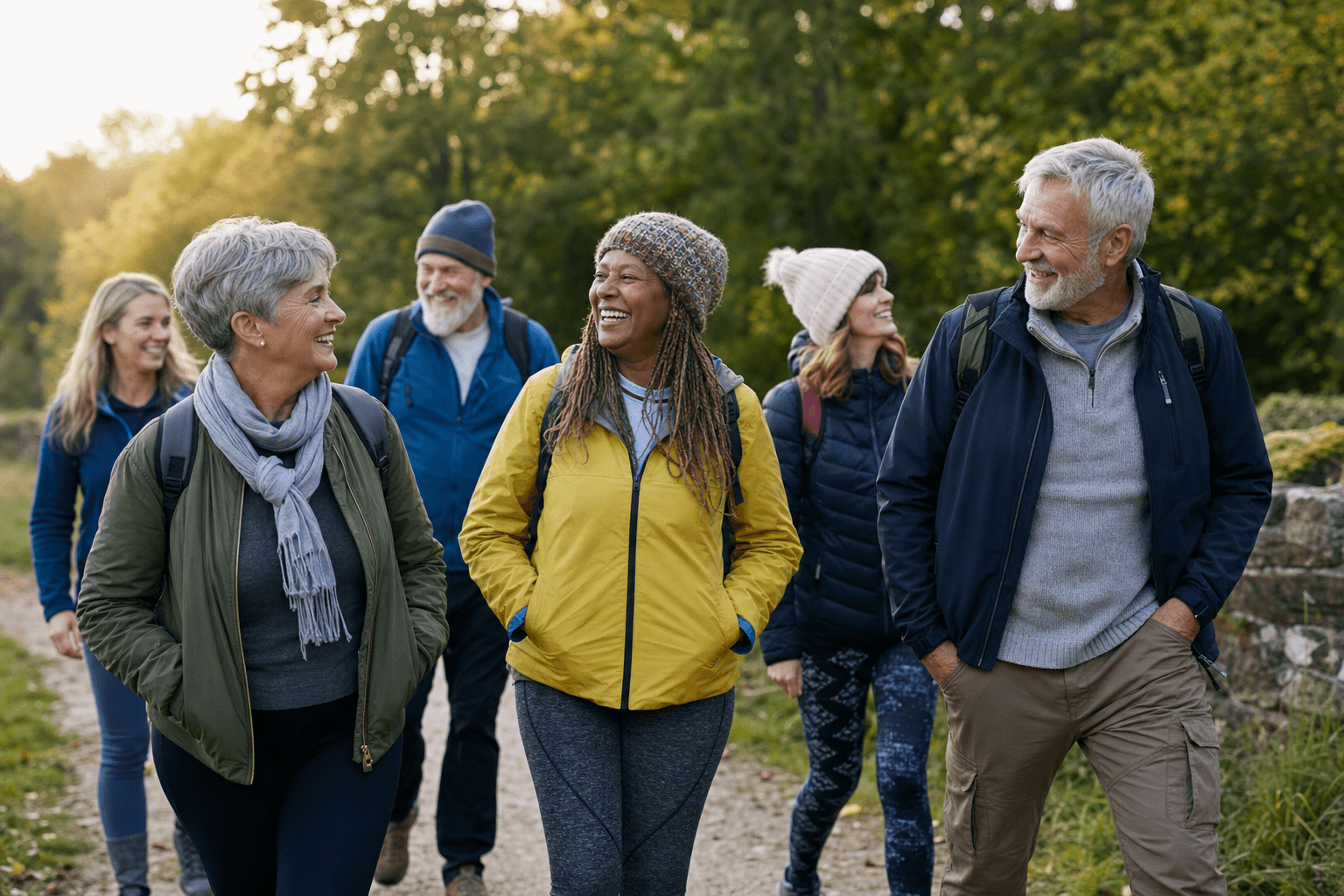
Walking asks for no membership, no special skill and almost no equipment. It is gentle on the joints, suits almost every fitness level, and can be done close to home. For most people, it is the single most accessible form of exercise there is.
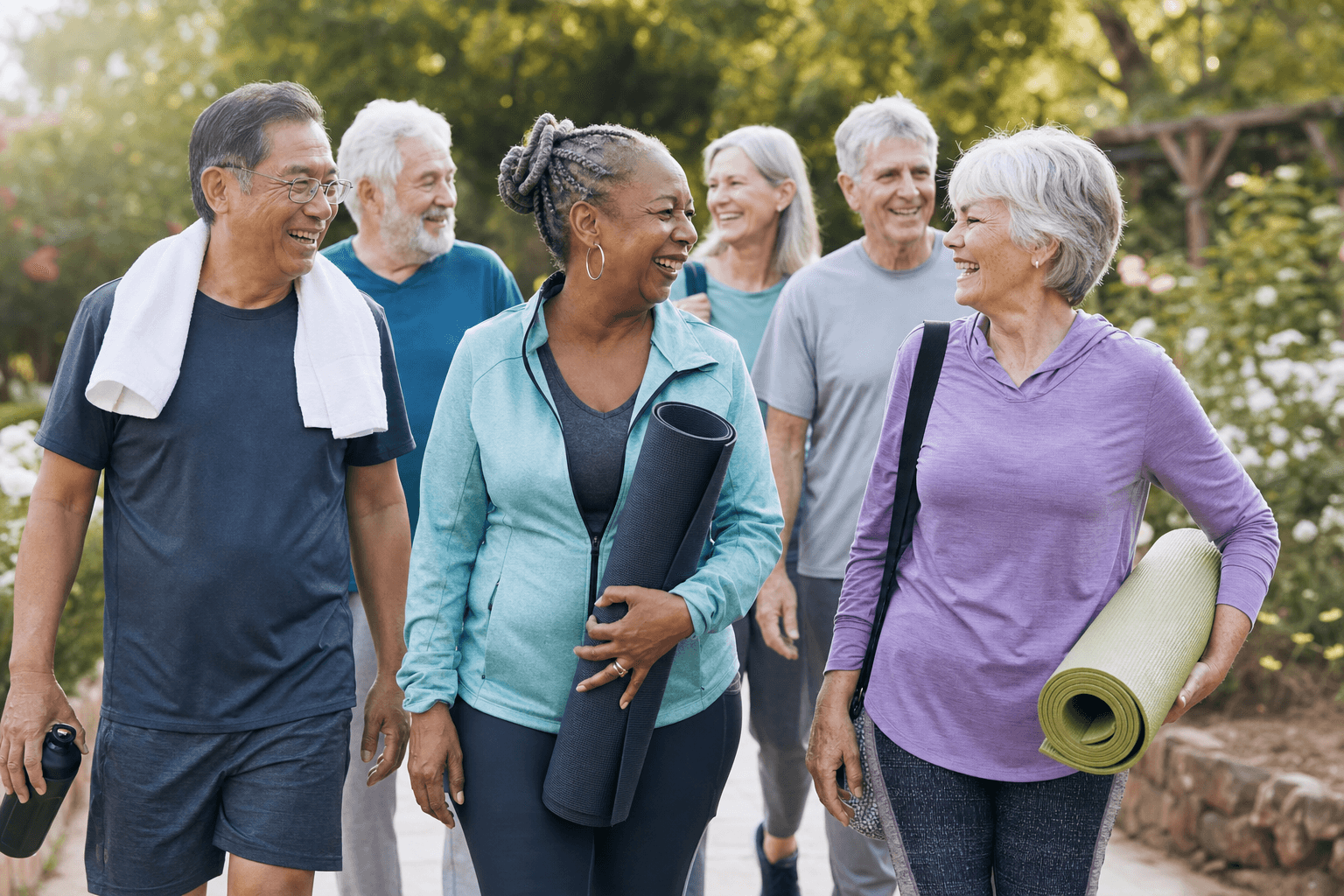
Walking becomes even more powerful when it is shared. A walking group turns a good intention into a standing appointment, and adds the benefits of company to the benefits of movement.
What regular walking does for the body
The health returns from regular walking are large for such a modest activity.
Heart and circulation
Brisk walking strengthens the heart, helps manage blood pressure and supports healthy circulation. Done regularly, it lowers the risk of heart disease and stroke.
Blood sugar and weight
A walk after meals helps the body manage blood sugar, which matters greatly in a region where diabetes is common. Regular walking also supports a healthy weight without the strain of intense exercise.
Bones, joints and balance
As a weight bearing activity, walking helps maintain bone strength. Moving regularly keeps joints mobile and supports the balance and leg strength that protect against falls in later life.
Mood and mind
Walking lifts mood, eases anxiety and clears the head. Outdoor walking, in particular, is consistently linked with better mental wellbeing.
Why doing it together changes everything
Many people start a walking habit alone and quietly let it slide. A group changes the odds in several ways.
There is accountability. When others are waiting at the meeting point, you go even on the days you might have stayed home. The social commitment does the work that motivation alone cannot.
There is enjoyment. Conversation makes the time pass quickly, and a walk becomes something to look forward to rather than a task to tick off. People in groups tend to walk a little further and a little longer without noticing the effort.
There is connection. A walking group delivers two health benefits at once, physical activity and social contact, both of which independently support a longer, healthier life.
How to start a walking group
Starting one is simpler than it sounds.
Begin small
Two or three people is enough. Invite a neighbour, a family member or a friend. A small, reliable group is better than a large one that struggles to agree on anything.
Choose a regular time and place
Fix the days, the time and the meeting point so that no one has to decide each time. Early morning or the cooler evening hours suit the Mauritian climate well and make the habit pleasant year round.
Pick a comfortable route
Start with a route that suits the least fit member, on safe, even ground. A coastal path, a quiet road or a local park works well. You can always extend the distance as fitness grows.
Keep it sociable, not competitive
The aim is steady, conversational walking, not a race. A good rule is to walk at a pace where you can still talk but feel your breathing pick up. Everyone should feel welcome regardless of speed.
Making it last
Groups endure when they are flexible and friendly. Expect that people will sometimes miss a session, and simply carry on. Rotate who leads or chooses the route to keep things fresh. Mark small milestones together, such as a month of regular walks, to keep motivation high.
If mobility is limited, the same principles apply at a gentler scale. A short, slow walk shared with others still delivers real benefits, and chair based or water based activity can fill the gap on harder days.
Beyond walking
The same logic extends to other shared movement. Gardening clubs, beginner swimming sessions, gentle stretching classes and community sport all combine activity with company. The specific activity matters less than the two ingredients that make it stick: regular movement and good people.
A word of care
If you have a heart condition, joint problems or have been inactive for a long time, it is sensible to check with a doctor before stepping up your activity. Start gently, build slowly, and listen to your body.
The takeaway
Walking is the most accessible health habit there is, and sharing it makes it durable. Gather a few people, fix a time, choose a pleasant route, and keep it sociable. Moving together protects the heart, the mind and the friendships that help us live longer, healthier lives.
A circle of support helps everyone live longer, healthier lives. Explore the wider Healthspan health ecosystem.