
Eating well together: food, culture and connection in Mauritius
14 June 2026 · By Longevity Circle · Updated 17 June 2026
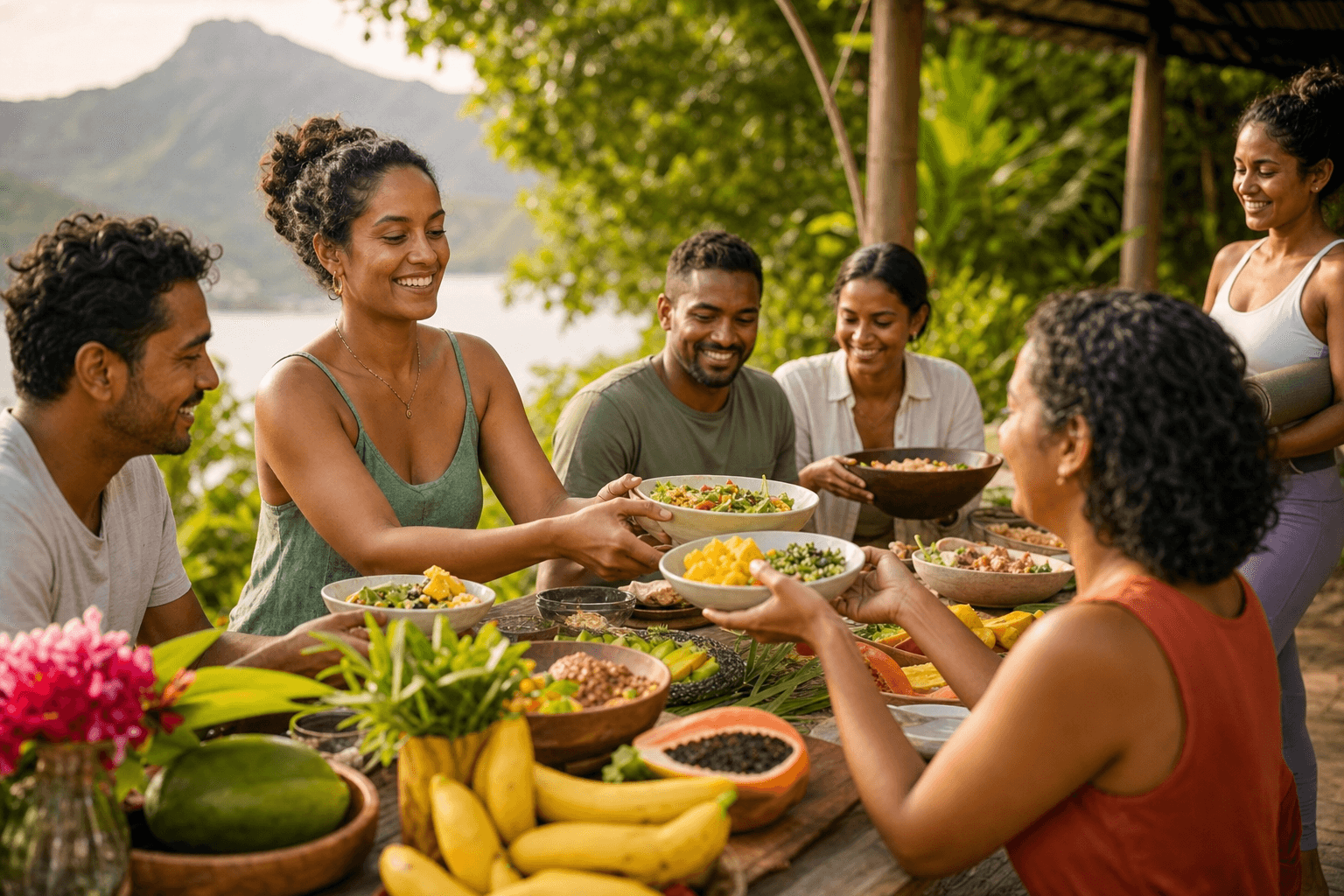
The shared table
In Mauritius, food is rarely a solitary affair. Meals are gatherings, festivals are marked by special dishes, and the kitchen is often the heart of family life. This habit of eating together is more than pleasant tradition. It is a quiet ally for healthy aging, supporting both good nutrition and the social connection that helps us live longer, healthier lives.
This article looks at how the shared table can serve our health, and how to make the most of a tradition that is already part of daily life here.
Why eating together is good for health
Research on shared meals points consistently in one direction. People who regularly eat with others tend to eat more balanced meals, feel better, and stay more connected.
Better food choices
Meals prepared and eaten together are more likely to be made from fresh ingredients than grabbed on the run. Cooking at home gives control over salt, sugar and oil, which is valuable in a region where diabetes and heart disease are common concerns.
Slower, more mindful eating
Eating in company tends to slow the pace of a meal. Conversation creates natural pauses, which helps the body register fullness and supports better digestion. A rushed meal eaten alone, often in front of a screen, encourages overeating.
A reason to gather
The shared meal is one of the most natural ways to maintain connection. It brings family and friends together regularly without needing a special occasion, delivering the social benefits that protect health alongside the nourishment.
Mauritian food as a foundation
The local table offers a strong base to build on. The island's cuisine is rich in vegetables, legumes, fresh fish and an abundance of fruit. Dishes built around lentils, beans, leafy greens and local produce provide fibre, protein and a wide range of nutrients.
The variety itself is a strength. A diet that draws on many vegetables, pulses and fresh ingredients supports the gut and the whole body far better than one built on a narrow set of processed foods.
Small shifts that help
No one needs to abandon beloved dishes. Healthy eating here is mostly about gentle adjustment rather than restriction.
Lean toward fresh and whole
Favour fresh vegetables, fruit, fish, legumes and wholegrains. Keep heavily processed and very sugary foods as occasional treats rather than daily staples.
Watch the salt and sugar
Cooking at home makes it easier to use less salt and sugar than packaged or restaurant food. Herbs, spices, garlic, ginger and chilli add plenty of flavour without the added salt.
Mind the portions and the drinks
Rice and bread are easy to over serve. Filling half the plate with vegetables and pulses leaves room for everything else in better balance. Choosing water over sugary drinks is one of the simplest, highest impact changes available.
Keep fruit close
With such abundant local fruit, keeping it visible and ready makes it the easy snack, in place of processed alternatives.
Cooking together as a habit
The act of cooking together multiplies the benefits. Preparing a meal as a family or with friends is enjoyable, passes on skills and recipes between generations, and turns healthy eating into a shared project rather than a private effort.
Involving older family members in the kitchen keeps them engaged and valued, while younger ones learn that good food is made, not just bought. The conversation around the chopping board is part of the social nourishment.
Festivals, balance and joy
Mauritius is full of celebrations, and food is central to them. Healthy eating does not mean refusing these joys. The richer festival dishes have their place, and enjoying them fully is part of a good life. Balance comes from the everyday pattern, not from any single meal. A year of mostly fresh, home cooked, shared meals easily makes room for celebration.
Making it work day to day
A few simple practices help the shared table support health.
Aim to eat at least one meal a day together where possible, at the table rather than in front of a screen. Plan a regular family or community meal each week as a fixed point. Cook in company when you can, and keep fresh ingredients to hand so the healthy choice is the easy one.
If someone has a specific condition such as diabetes or high blood pressure, a doctor or dietitian can give tailored advice that still fits the family table.
The takeaway
In Mauritius, the tradition of eating together is a gift for healthy aging. It encourages fresh, balanced food, slower and more mindful meals, and regular connection with the people who matter. By leaning into the shared table, and making a few gentle shifts toward fresh and whole foods, we nourish both body and bond at once.
A circle of support helps everyone live longer, healthier lives. Explore the wider Healthspan health ecosystem.